

You are here

Publications

  • Publications

UNIDO has prepared and published over one hundred publications, papers, manuals and guidelines, primarily aimed at technical experts and policy makers in developing countries, though many are used by sector-related institutions and development organizations elsewhere.

The website www.leatherpanel.org is intended to provide an easy access to information sources on the leather, footwear and leather products industry, as well as to UNIDO publications related to the leather sector in one place, including earlier publications that were previously only available in hard copy.

The only true leather-building substance in raw hide is corium collagen, everything else (hair, epidermis, fat, some proteinaceous matter etc.) has to be removed for which purpose substantial quantities of both general and specialty chemicals are needed; only some 20 % of them is actually retained by leather. Agglomerations of traditional tanning units with inadequate investment potential, lack of space and specific skills were conducive for setting up Common Effluent Treatment Plants (CETPs) servicing tannery clusters, the concept also adopted in relocations and/or establishing new leather clusters in developing countries. Due to only gradual increase in volumes of effluents and seasonal fluctuations associated with religious festivals, new CETPs are designed in modular way. On-site, physical-chemical (primary) treatment, including strict segregation of streams, catalytic oxidation of sulphide bearing spent floats, chrome management as well as equalization, settling, sludge removal and dewatering are by now already well-established technologies; the biological (secondary) treatment, typically using activated sludge method, often in raceways, in addition to high energy consumption, requires experienced personnel and close monitoring, in particular the removal of excess nitrogen (nitrification/denitrification). 

However, reutilisation and/or safe disposal of sludges remains a challenge to deal with. It appears that in very arid regions the best option to overcome the problem of Total Dissolve Solids (TDS, colloquially salinity) is to link tannery (C)ETPs with Municipal Wastewater Works (MWW).

Furthermore, it is important for the leather sector to take a proactive role in battling negative publicity and spreading of misleading information by fake green lobbies and pressure groups. Better coordination among various national, regional and global leather organizations, including R & D institutions would make a stronger impact.

The Regulation of the European Union (EU) on Registration, Evaluation, Authorisation and Restriction of Chemicals, REACH entered into force on 1st June 2007. Its proclaimed aims were to ensure a higher level of protection of human health and the environment as well as free movement of substances, on their own, in preparations and in articles, while enhancing competitiveness and innovation.

This Regulation should also promote the development of alternative methods for the assessment of hazards of substances. REACH was also expected to streamline and improve the former legislative framework on chemicals in order to improve the protection of human health and the environment from the risks that can be posed by chemicals, especially by those listed as Substances of Very High Concern (SVHC) The purpose of this desk study was to give some background information and practical advice to the leather industry so as to maintain or establish business in the EU market.


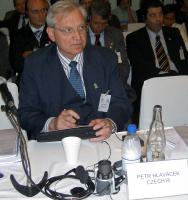
Paper prepared and presented by Mr. P. Hlavacek during the 14th UNIDO Leather panel Meeting in Zlin/Czech Republic

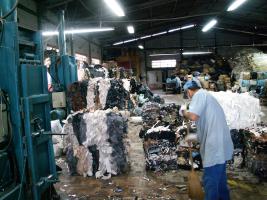
The present report provides production ratios of solid wastes in leather, footwear and other leather products manufacture and analyse why such wastes are produced and analyses possible solutions in order to reduce the quantity of waste, or to recycle them. 

The report was prepared by C.T.C. for the 14th UNIDO Leather Panel session.

The objective of the study is to analyze the actual, fairly contradiction situation caused by economic changes in the past 3-5 decades, to review the most pressing problems – especially from developing countries point of view (where the bulk of leather processing and leather products manufacturing takes place presently) and to recommend principles and directions for [internationally] coordinated development in this field. Paper prepared and presented by Mr. F. Schmel during the 17th UNIDO Leather Panel Meeting in Addis Ababa/Ethiopia (January 2010)

This paper attempts to discuss the main, predominantly technical, issues with regard to benchmarking; it is intended to assist those who are willing to admit to the fact that despite all explanations and definitions available, they are not quite sure what it is all about and whether and how it could be applied in the tanning industry. The paper outlines "cock-pit" check lists for ten areas - components: 1. Tannery location, infrastructure 2. Production parameters 3. Cleaner technologies 4. Energy management and consumption 5. Quality assurance, reprocessing, delivery time, failures 6. Product development, strategies 7. Occupational safety and health at work, maintenance 8. Effluent treatment, solid waste, air emissions 9. Financial indicators 10. Human resources and staff welfare, CSR. Some typical production parameters are also provided.


The essential part of any tannery waste audit is assessing the efficiency of existing operations carried out during the leather manufacturing process. Typically, tannery staff have a good idea of, and comparatively accurate figures on the waste resulting from specific operations such as fleshing, splitting, trimming or chrome tanning. Only rarely, however, they have a proper overview of the entire range of waste generated. Thus, when considering various cleaner technologies or waste treatment systems, having access to a complete computation of the overall mass balance certainly makes it easier for a tanner facing arduous choices. Dialogue with environmental authorities is also simpler if such figures are readily available. This paper attempts to provide a comprehensive computation of a mass balance and the efficiency of the leather manufacturing process for a tannery, seen as a closed entity. The calculations are deliberately based on operations in a hypothetical tannery processing bovine hides and producing upper leather for shoes. With minor exceptions (batch washing instead of continuous rinsing, splitting in lime, roller coating), it follows the conventional process.

Presented publications documents UNIDO's involvement in promoting Eco-Labelling in the leather industry. Life-cycle assessments or the evaluation of the potential environmental impact of a product system from cradle to grave are fundamental features of some ecolabelling schemes and environmental management systems. Nowadays rhe environmental auditing protocol and reporting mechanism developed and maintained by the Leather Working Group aims to tackle important topical issues, and reflect improvements or changes of technology within the sector.

The Technology package "A System for Recovery and Reuse of Chromium From Spent Tanning Liquor Using Magnesium Oxide and Sulphuric Acid" provides practical overview of the chrome recovery process including equipment specification.

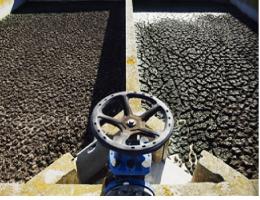
Utilization and/or safe disposal of sludges generated in the course of effluent treatment still represents a great challenge; worldwide many methods have been explored and proposed. This report describes the attempt made under UNIDO Regional Programme in South-East Asia to test another path. The idea was to convert the hazardous tannery sludge  into an inert, physically stable mass, with very low leachability and sufficient strength to allow making building materials like nonfired bricks for fencing or for landfilling or land reclamation. Solidification  (cementation) was achieved by mixing the sludge with various materials to form a solid product hoping that immobilisation/chemical stabilisation) will also be achieved.

Pages